The Mutual Support Group (GAM) in Guatemala is a prime example of a nonviolent resistance group. Since their creation in 1984 the group has fought to find the disappeared family members of many of its members. It is important to note that the GAM was founded by women who had had family members disappeared. A case similar to the GAM’s is that of the Madres of the Plaza de Mayo in Argentina. When it comes to nonviolence it is unsurprising that the efforts are led by women. Women are historically left responsible to carry the weight that violence and war leaves behind. This is because many of those who are involved in the war, or have disappeared as a result of the war, are men. Violent action is inherent to masculinity whereas nonviolent resistance is more associated with women. The GAM’s founder, Nineth Montenegro, often lead the other members in marches and spoke publicly against the government.
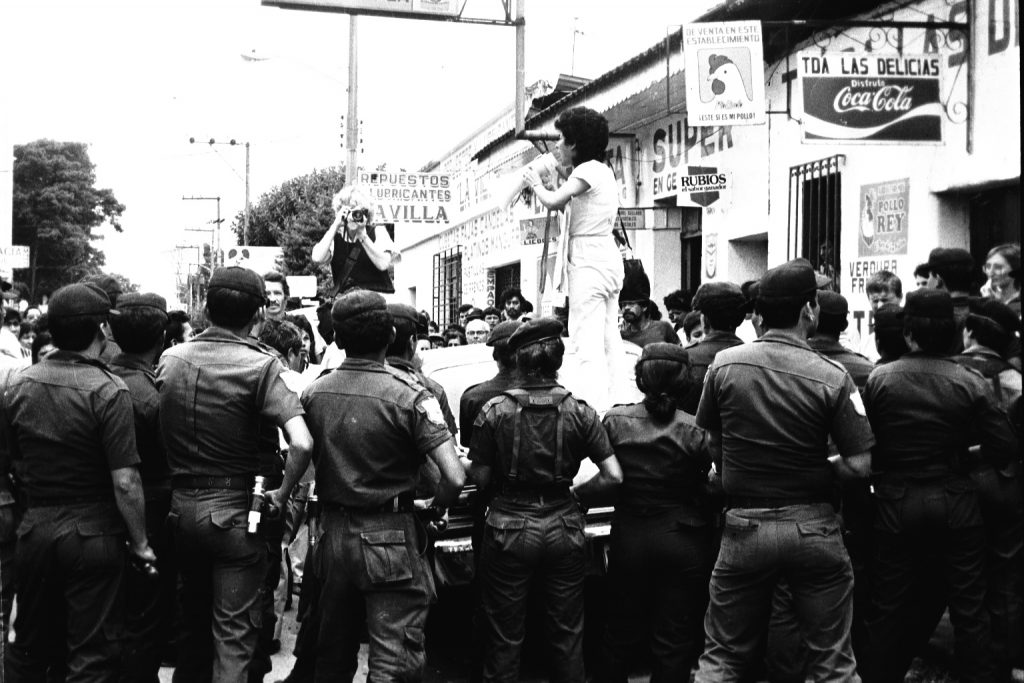
In order to explain how the GAM functions and their goals I believe it is important to explain their view of justice. During one of my interviews, I asked one of their members what justice meant to them. They answered that they believed that justice was different for every person. For the interviewee justice meant that the law was followed. However, they explained that for others, especially victims of the armed conflict justice can be knowing the truth of what happened to their family members. The interviewee explained that part of justice was also being able to forgive what had happened to them and their family. Some victims may want to take their case to trial, however, for some this might not be true. The interviewee explained that either way of seeing justice made sense and was fair because they all experienced things differently.
In efforts to bring justice to the members and their families, they have taken many actions to call attention to the lives of their loved ones. Amongst these efforts are marches, public speeches, legal actions, and the digitization of its archive. All of these can be seen as methods of nonviolence. When I was in Guatemala I got to interview two of the members of the GAM. During these interviews, I asked them what nonviolence meant to them.
One of them stated that nonviolence is a form of resistance simply by using their bodies.
Actions in which protesters only use their body to oppose an action that may be being carried out by police or armed forces. Block a road … without doing anything other than being there peacefully.
GAM Member
The other it defined it as
Having to resist as far as we can
GAM Member
Both of their insights were extremely beneficial to how I would come to understand their work.
While I was seeing their work through an academic mindset they were seeing it as lived experience and what needed to get done. That said, there are many things which the GAM does today that fall under Gene Sharp’s 198 methods of nonviolent resistance, which they are not aware of.
While in the beginning, the GAM focused itself primarily on marches and demonstrations, today, the GAM is led by Mario Polanco, a lawyer. The GAM now works to take cases to court and promote human rights changes within the government. This shift can be seen through the GAM’s historical archive. At the time of the GAM’s founding, many of its documents were intake forms, filled out by family members or members of a community that wanted to report someone’s disappearance. The collective effort to denounce the human rights violations in Guatemala makes the GAM’s work more dynamic. It isn’t simply those who work in the office who are part of the GAM. The GAM is also the family members and community members who filled out the form, the victims who weren’t disappeared.
As the years progress the archive gains habeas corpus petitions filled out by members such as Nineth. Cases in the archive hold as few as one habeas corpus, however, most of them contain multiple copies of the petition. Years down the line letters from and to lawyers, including Mario Polanco himself, begin appearing in the archive. These letters take many forms, written to international organizations or Guatemalan officers and head of state. With its wide range, the disappeared collection of the archive serves as a way to track the way the work of the GAM has shifted.
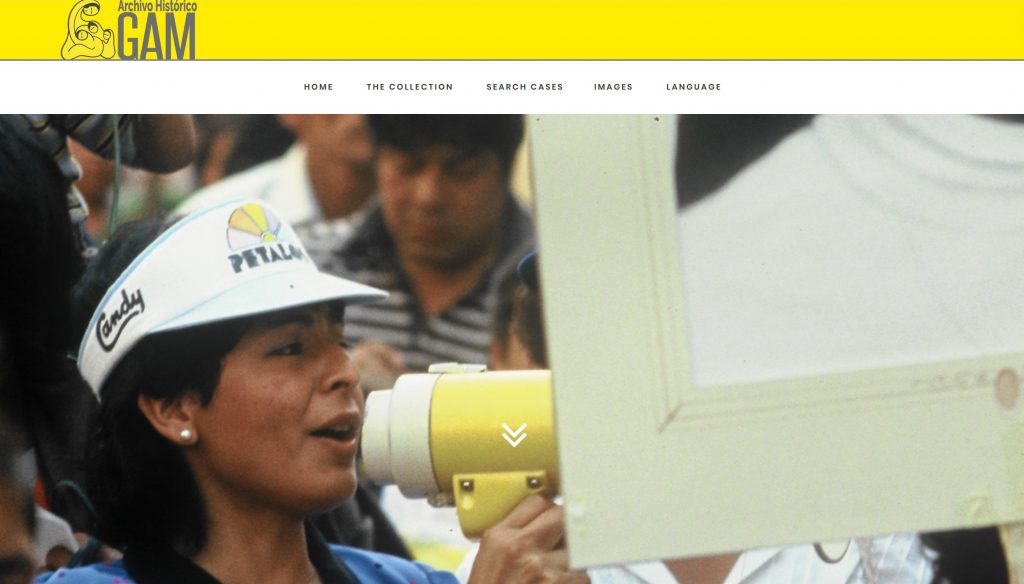
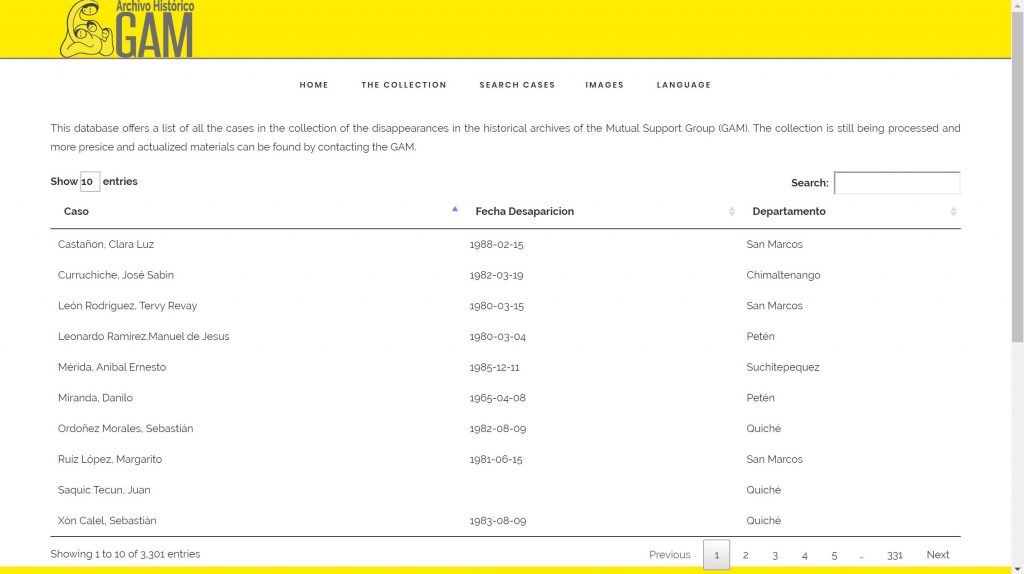
The archive’s online publication serves as a form of resistance against the state supported violence. No longer are the documents hiding in a room for only GAM members and workers to see. Now the are accessible to the public, all around the world. Both of the GAM members who I interviewed were asked what they thought about the work of the GAM Digital Archive. They both expressed that it held importance because it allowed them to disseminate their archive outside of the organization. They also explained that it served as a way to show the youth what had happened in their country.
A lot of youth doesn’t know what happened … you can’t say that here in Guatemala there was no war
GAM Member
The digital archive’s primary goal is to promote historical memory, when it came to this GAM members shared that the archive allows people to not forget.
Do not let them disappear completely
GAM Member
Be known that these missing people had dreams … that there would be change
GAM Member
What isn’t found in the archive are records of the exhumations, posters, and books which the GAM has worked on. These can be found spread out throughout the GAM office, some stored better than others. Along with these are the collections of images taken by the GAM or others during their demonstrations at the start of the organization, as well as of their workshops today.

During both of the interviews, the interviewees touched on the importance of exhumations to the work of the GAM. They explained that the exhumations helped to bring closure to so many family members. However, it also created many questions about those who have not been found. In the GAM offices, there are several posters, done by one of the GAM founders, which depict the process of exhumations for many of their trips.
Exhumations helped to bring closure to so many family members. However, it also created many questions about those who have not been found. In the GAM offices, there are several posters, done by one of the GAM founders, which depict the process of exhumations for many of their trips.
Alongside these posters, there are others which track the GAM’s history. One of the rooms in the GAM offices houses posters from the GAM’s activities from their start till now. Amongst these are enlarged photos of the disappeared as well as programming from the GAM and other organizations. There are also enlarged images of GAM activities and some of its founders. In another room of the offices are banners which GAM members carried during protests. These included names and images of the disappeared which serve as evidence to the number of people who had been disappeared and affected by the armed conflict. These posters, unfortunately, have not been digitized but images of some of them can be found here.
Another form of resistance which the GAM continues to work on is their publications. While at the offices I noticed two bookshelves filled with reports that varied in subjects.
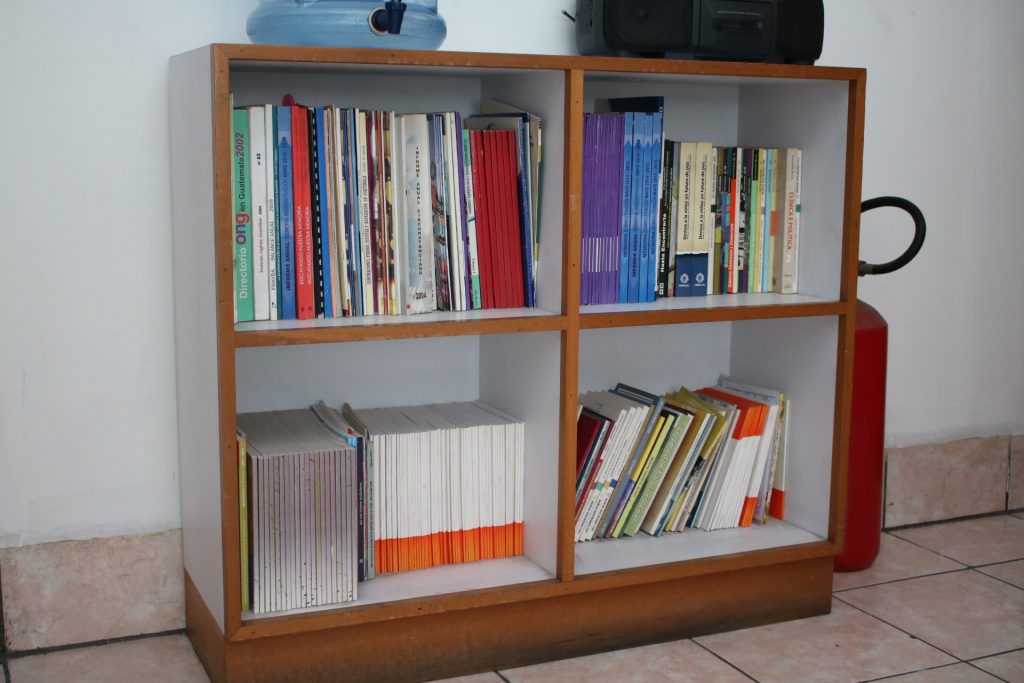
These ranged from reports on government spending to reports on the massacres in Guatemala. While I did not get to read them I did get a view at how much work the GAM has been doing.
