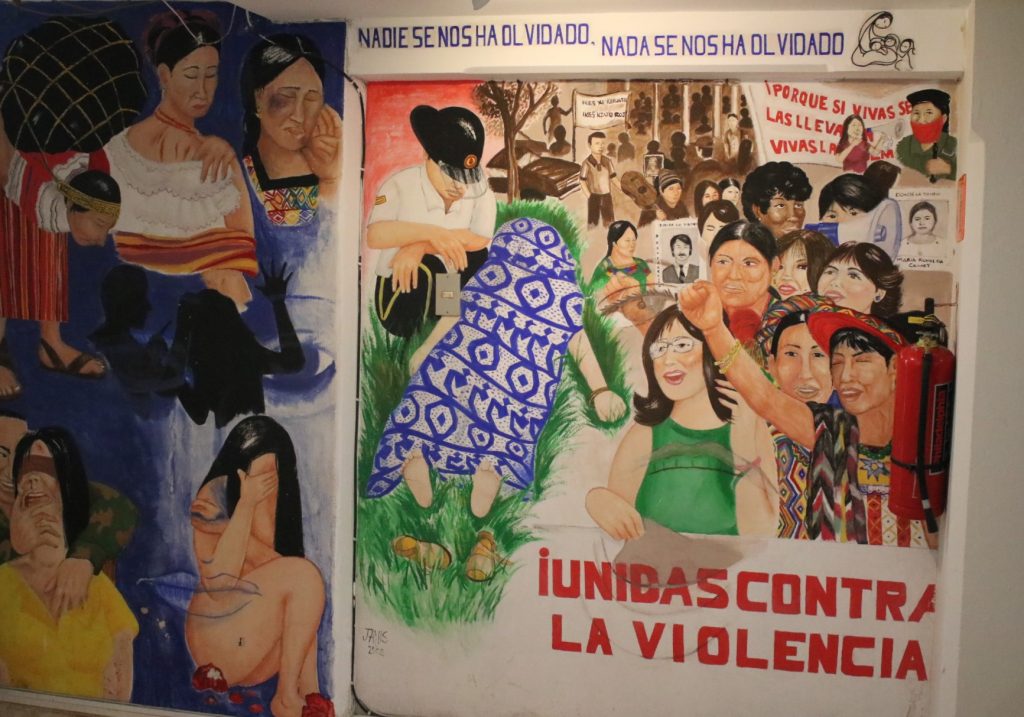
Art as Resistance
Art as resistance is pretty self explanatory as it is a form of creative activism that resists something. In this way art serves to disrupt everyday life and involve/inspire the passerby to rethink their preconceived notions on the topic displayed. The art form, however, can shift from murals, posters, mantas, and even theater or music. I will mainly be focusing on murals, posters, and mantas.
Murals, the most common form of art as resistance, exists throughout most cities and for the purpose of this piece larger graffiti pieces can be seen as a form of mural work. Daniela Vicherat Mattar states that murals give walls a voice as they serve to tell stories and make narratives visible. In this way, murals can keep historical memory alive depending on what is depicted on the wall. Vicherat Mattar points out that on the other hand, murals can also serve to hide other narratives. Following this view, murals serve as a display of power. Whoever paints or commissions the mural decides what gets depicted on the wall. On top of this, the location and ownership of the wall itself also shows power.
The next form of art I will discuss is posters, or afiches. Jayne Howell calls them “murals on feet” as they can be transported anywhere given the necessity unlike murals. Like murals, however, they can be used in public spaces, the only thing that changes is the amount of public spaces that can be reached.
Like posters, mantas, have a similar benefit as depending on their size they may be easier to transport. Posters and mantas have the ability to be taken on marches which allows them to be seen more than murals.
Art as resistance only works if the art can be viewed. Therefore, the location of said art is important. If a piece is placed somewhere very visible there are bigger odds of more people paying attention to it and it becoming a trigger for thought. Murals, for example, become sites of consciousness since they require people to stop and think about what is being shown to them. At the same time, these locations become a nexus for thought given that depending on the viewer's point of view the mural can be seen differently. Posters and mantas similarly cause people to think about what is being displayed, the difference, however, is that because they are not part of the city they are not permanent and therefore cannot be revisited.
In performance theory, and most things related to art, the primary question is “what does it do”? The reasoning for this is that the piece of art must cause some reaction from the viewer. In the case of art that serves a purpose of resistance there are many answers to this question. In a larger social scale it can encourage participation in the cause of the artist or group sponsoring the art. On a smaller scale it can cognitively open up new perspectives in the viewers and on an even smaller scale it can have an emotional impact by being cathartic. Art as resistance works in such a way that through responses to the art communities are built. These communities can either support or go against the art’s ideas but either way it creates a conversation. The creation of such communities causes a reconstruction of everyday life for some people. This reconstruction can be as small as seeing a new mural on the way to work to something as big as joining a movement in support or against the movement that the art supports.
The importance of art is often lost due to time but at the end of the day it is important to note how art is part of us as a society. Murals aren’t simply something pretty, they are often a call to pay attention to something. Jamie Mcphie calls walls the “skin of the city”. When calling walls this Mcphie also notes that walls are therefore an extension of our skin. The murals or posters that are placed on a wall are like tattoos which we place on our skin, the only difference is the control over the city’s “skin”. Social life is controlled by authority and therefore so are the walls of the city. Governmental authorities often cover up murals/graffiti or take down posters which they deem unfit and this repression of art is a repression of its people. The erasure is a way of political censorship and control of bodies.
