The use of art by the GAM, mainly at the start, has allowed them to continue their efforts of nonviolence. As I have explained, art does not have only one form, and the GAM has taken advantage of this. Their use of afiches during their walks has allowed them to get their message across to many Guatemalans.
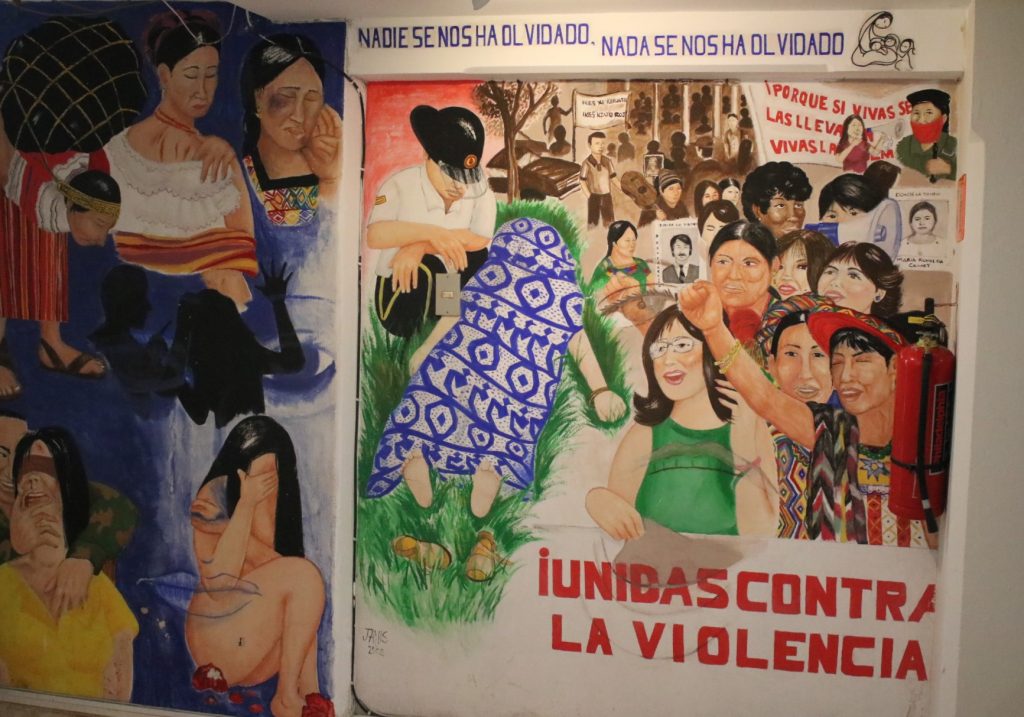
Nadie se nos ha olvidado. Nada se nos ha olvidado.
The afiches themselves range in variety, which allows the GAM to alternate what part of their message they wanted to convey. At the start of the GAM the afiches consisted mainly of sayings like the one above and/or of pictures of the disappeared with their names and the date of their disappearance. Furthermore, they have created mantas with the names of the disappeared and massacred. They have walked with these mantas to show that these people have indeed not been forgotten.
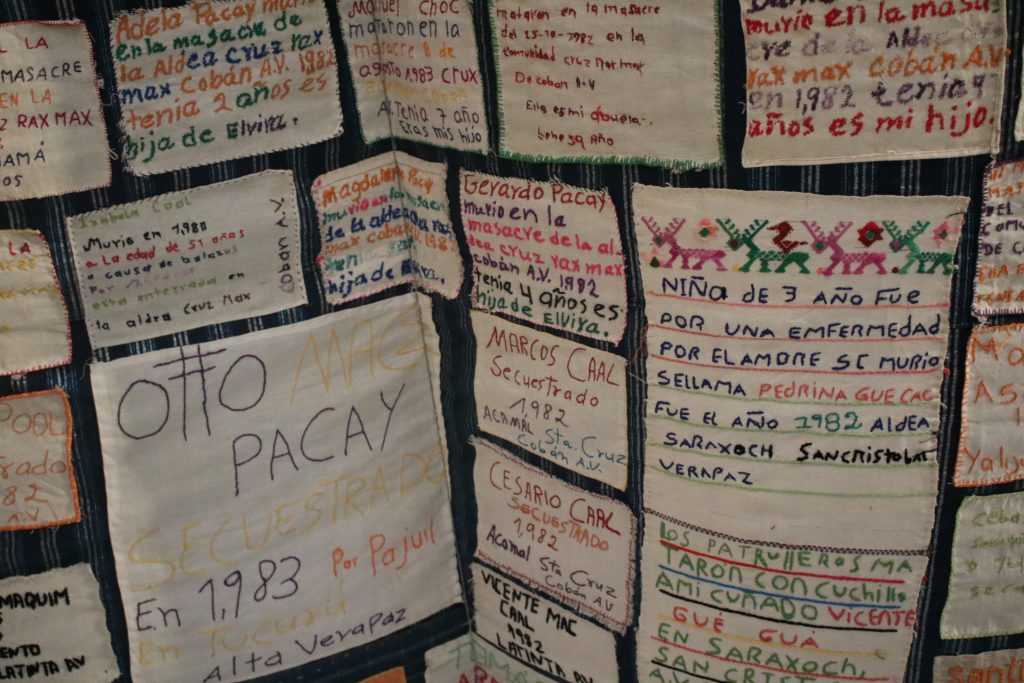
The examples that I mentioned above, however, are different from how the GAM has used art in recent years. In recent years the GAM has shifted to being more of a human rights organization with a legalistic perspective. This has meant that they have not led marches as they once did. However, the GAM still continued to produce and house material in their offices that serve as art as resistance. The GAM has a mural at the Universidad de San Carlos (USAC) near the law classrooms which depicts the struggles of the internal armed conflict.
Two other examples of “current” art are the murals that exist within the GAM offices. The first one is located at the entrance of the offices near reception and the second in the big salon at the back of the house. The first of the murals is a depiction of the internal armed conflict done in 2005. This mural causes the viewer to stop upon entering the office. On the left side of the mural are depictions of the many human rights violations that occurred during the armed conflict. The right side of the mural shows the work of the GAM and other organizations during their marches. On the right lower corner appear the words “¡UNIDAS CONTRA LA VIOLENCIA!”
The second mural, located where GAM members have many of their meals and meetings as well as press conferences, is a depiction of the work of the GAM painted in 1988. The mural has images of the late Rosario Godoy, one of the founders of the GAM. The bottom left corner of the mural says “En solidaridad” and holds the names of the creators, Amanda Hala and Lynn Hutchinson.
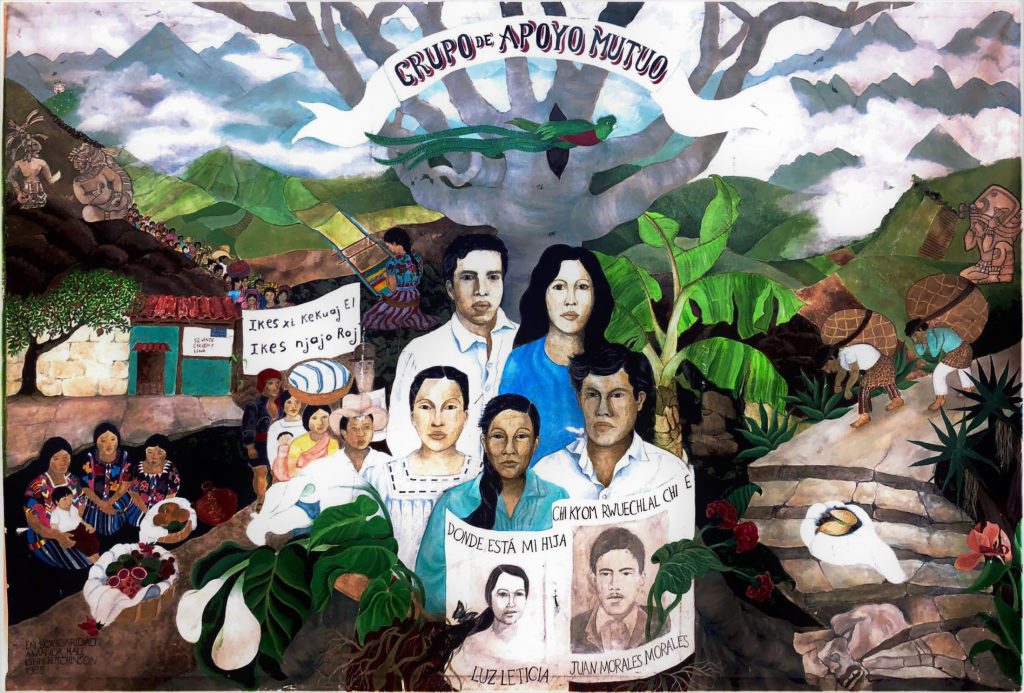
The reason I include this in the “now” of the GAM is because it is located in a central space for the organization and was placed there recently. When we got to the offices these two murals and some of the first things that were shown and explained to us.
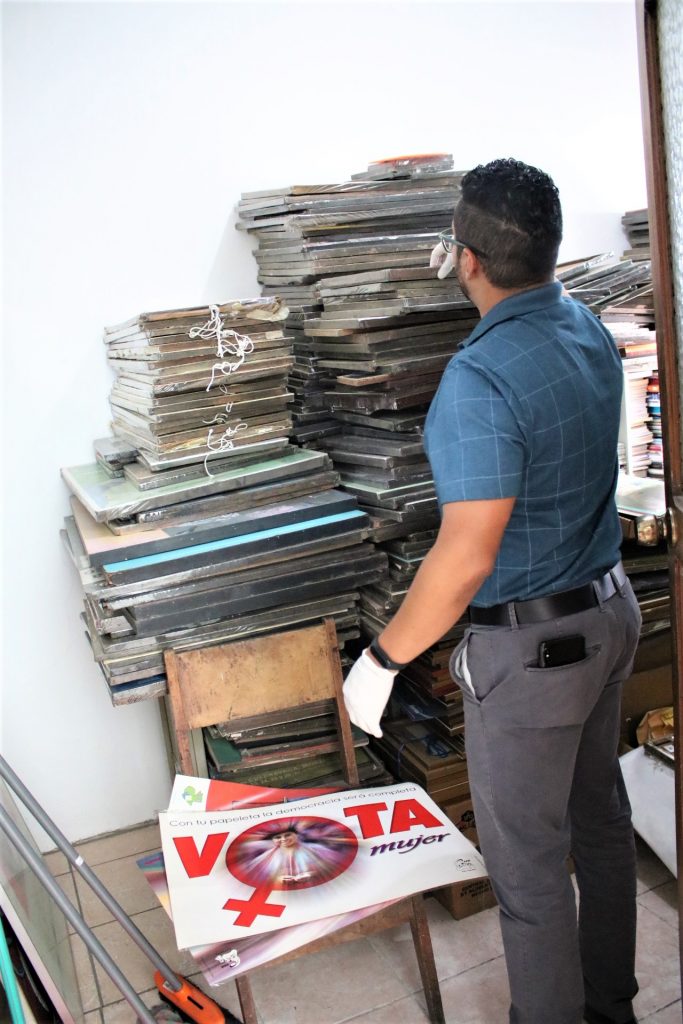
Another piece of the GAM’s art is their posters, majority of which are sadly now housed in a small room near the archive. At some point, these posters of the events which the GAM was part of, hosted or led were located around the house itself.
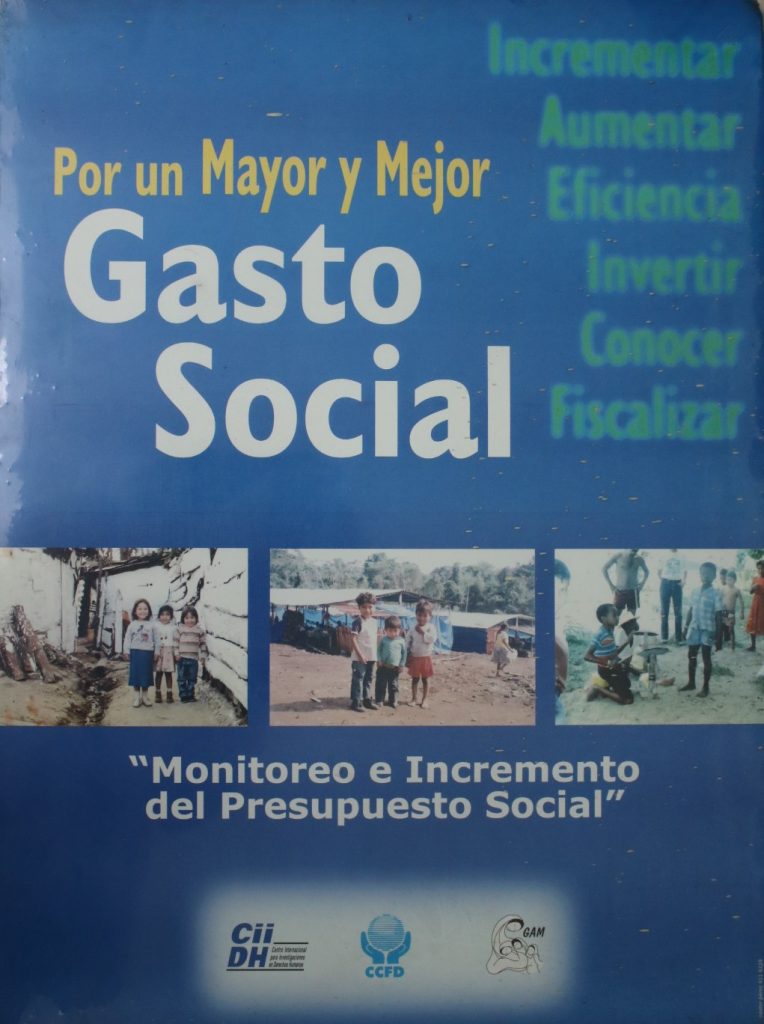
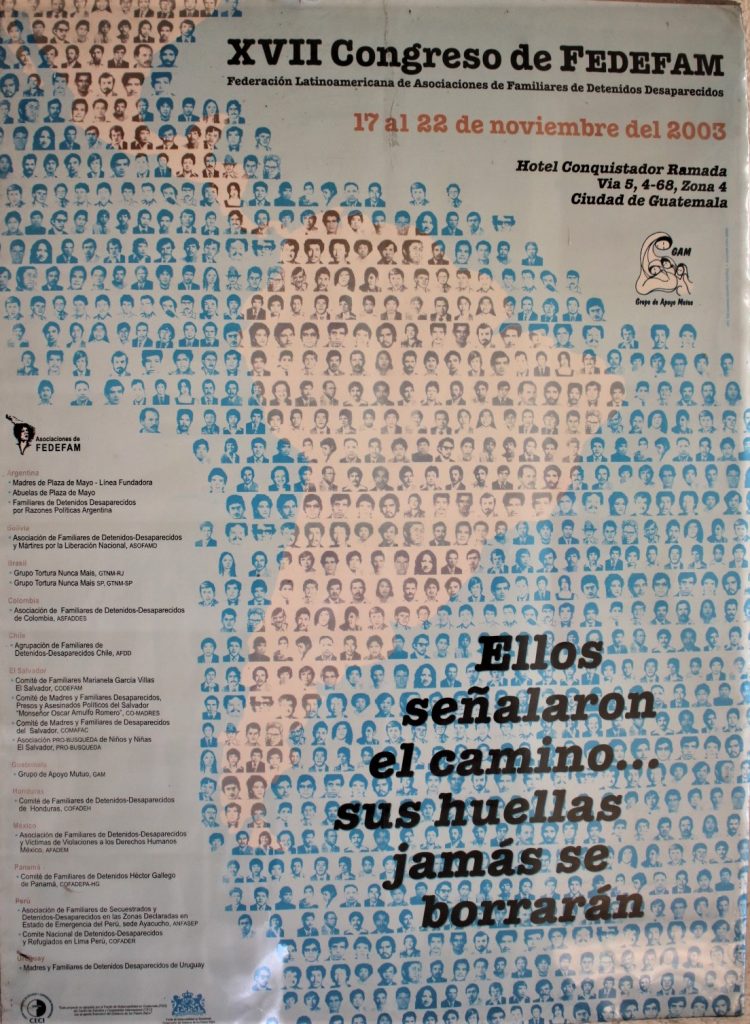
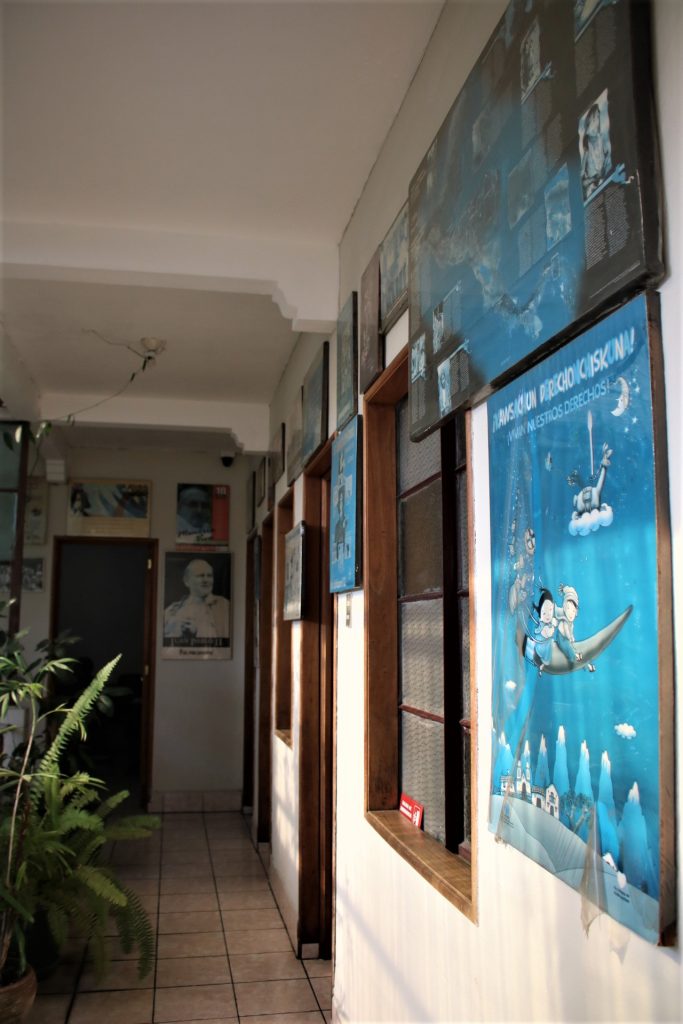
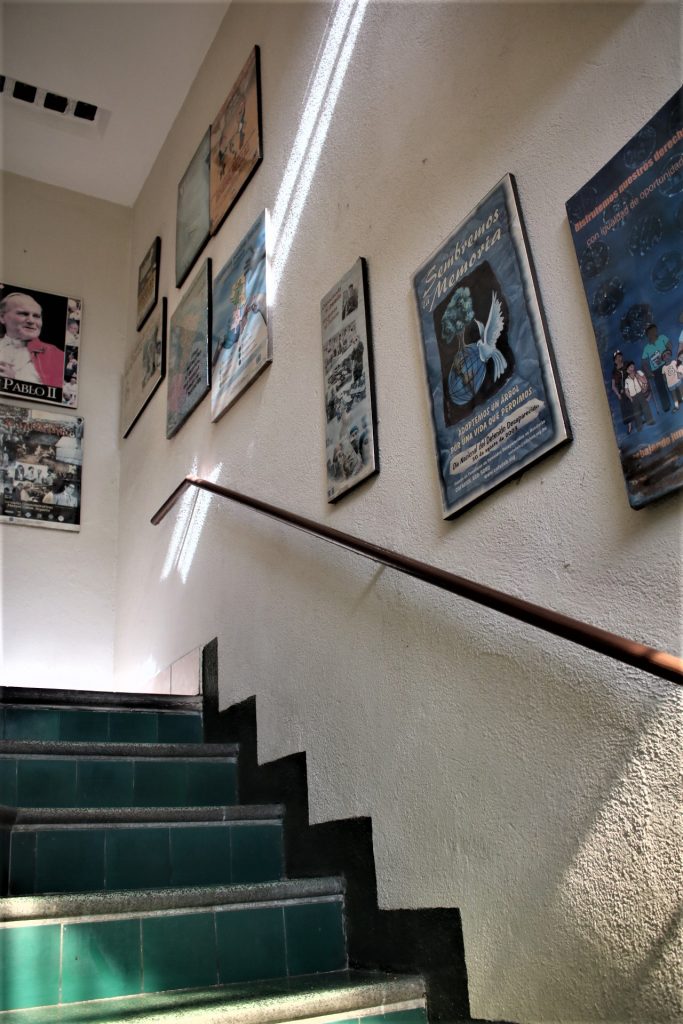
However, as their condition deteriorated, they were placed in a room, which has only sped up the process. The hope is to one day display them or digitize them. Some posters remain hung around one of the staircases in the house and depict some of the conferences which the GAM has participated in.
The last piece of art that I wish to touch on is the GAM logo. The logo, a mother and three children hugging, is an example of art as resistance itself. The logo serves as an acknowledgment of the reality of the armed conflict after many men were disappeared. During the armed conflict, many families were left without men in the household causing many children to grow up without fathers. Alongside this many women were left having to support one another, as is the mission of the Grupo de Apoyo Mutuo.
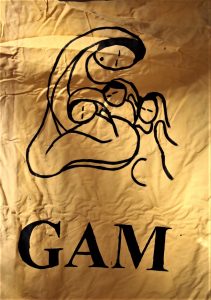
During an interview, I asked one of the founding members how it was that the logo came to be. Her words were,
It wasn’t created by one person, it was a collaboration. like grains of sand.
Not only does the logo explain the social climate at the time of the creation of the GAM but it also explains how things worked at the GAM. They were, and continue to be, an organization based off of collaboration and “puños de arena”. Everyone puts in work.
